The Whale Team · 10 August 2026 · 8 min read
Agentic AI for Rapid Creative Production, Rooted in Consumer Insight
How evidence-based image creation can make consumer insight tangible in the creative process, while helping teams synthesise and prioritise signals at scale.
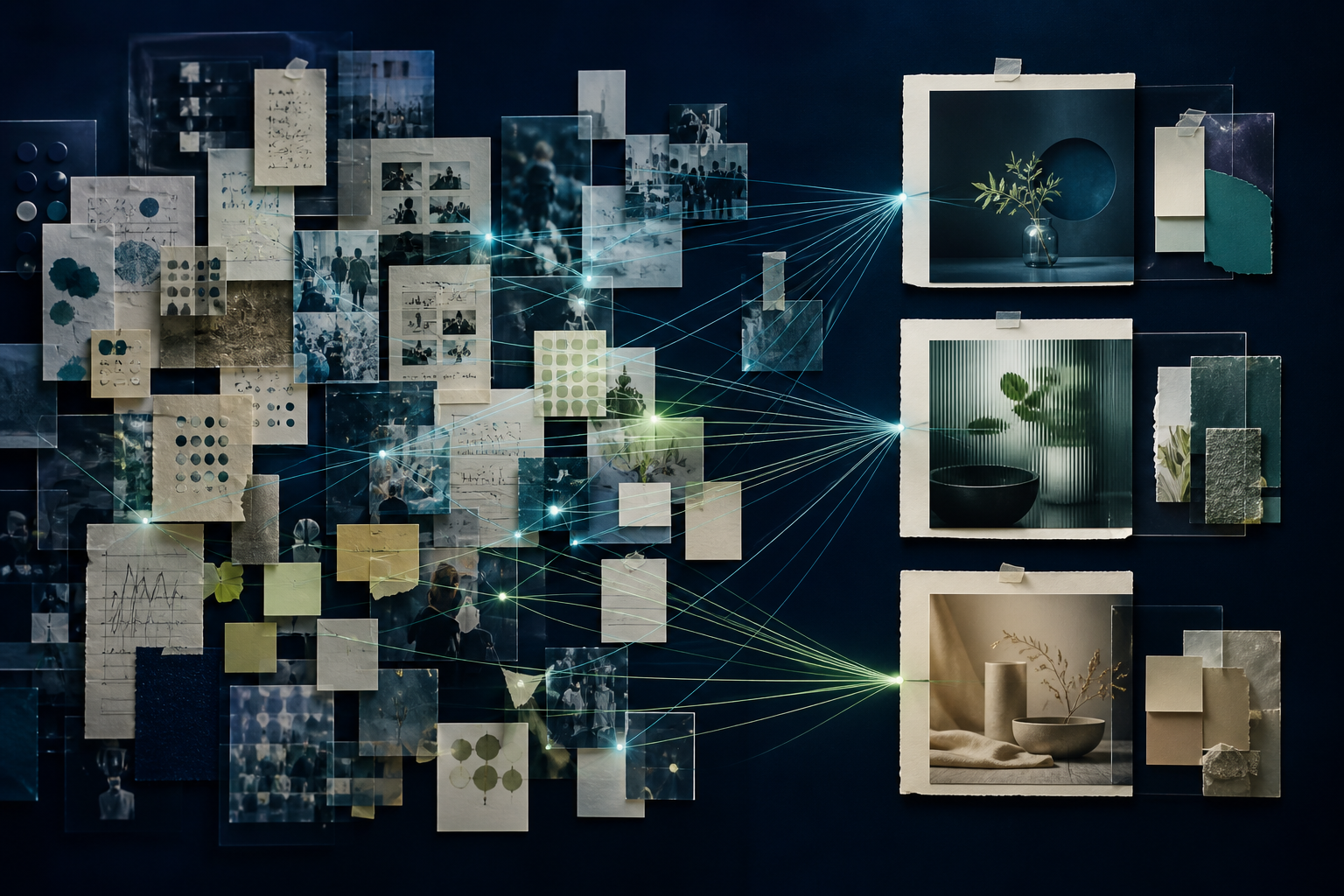
Evidence-based image creation uses AI to turn consumer signals into visual material a team can react to, while retaining the context that gives those signals meaning. In Whale, teams can synthesise inputs across research, participant contributions, and creative exploration, then prioritise the routes that are both compelling and grounded in evidence.
Fast image creation needs an evidence-based starting point
The demand for more content, more variations, and faster response is real. But an image created quickly can be difficult to use if it is disconnected from the people it is meant to serve. The issue is rarely a shortage of visual output. It is a shortage of continuity between consumer understanding and the creative process.
Evidence-based image creation starts with a real brief and selected research—not a blank prompt. Consumer language, behaviours, reactions, cultural context, and category tensions give a team something meaningful to explore. Images can then make an emerging thought visible, so people can respond to a shared object instead of an abstract description.
That distinction is subtle but important. The image is not the insight, nor is it the final answer. It is a way to bring an insight into the room: to give it texture, make its implications discussable, and keep the creative response anchored in the evidence that prompted it.
Make consumer signals tangible without losing their meaning
Consumer insight is not prompt decoration. It is the context that helps a team understand which human tension, behaviour, language, or unmet need deserves a response. Retaining the source, circumstances, and limits of a signal alongside the team's interpretation prevents an attractive visual from becoming detached from what it is supposed to represent.
A productive workflow turns signals into a tension, an opportunity, a role for the brand, and a small number of creative routes. AI images make those routes tangible early enough for a team to ask: does this feel true to the audience? Does it express the opportunity? What is missing? Those questions improve the direction rather than merely multiplying assets.
The aim is not to automate agreement. It is to make useful material easier to see, challenge, and develop while the people closest to the audience and brand can still shape the outcome.
- Signal: a source-backed observation, reaction, or pattern.
- Tension: the human or category dynamic that makes the signal meaningful.
- Opportunity: a credible change a product, service, or brand might make.
- Creative route: a focused expression that the team can build, compare, and test.
How Whale brings insight into image creation
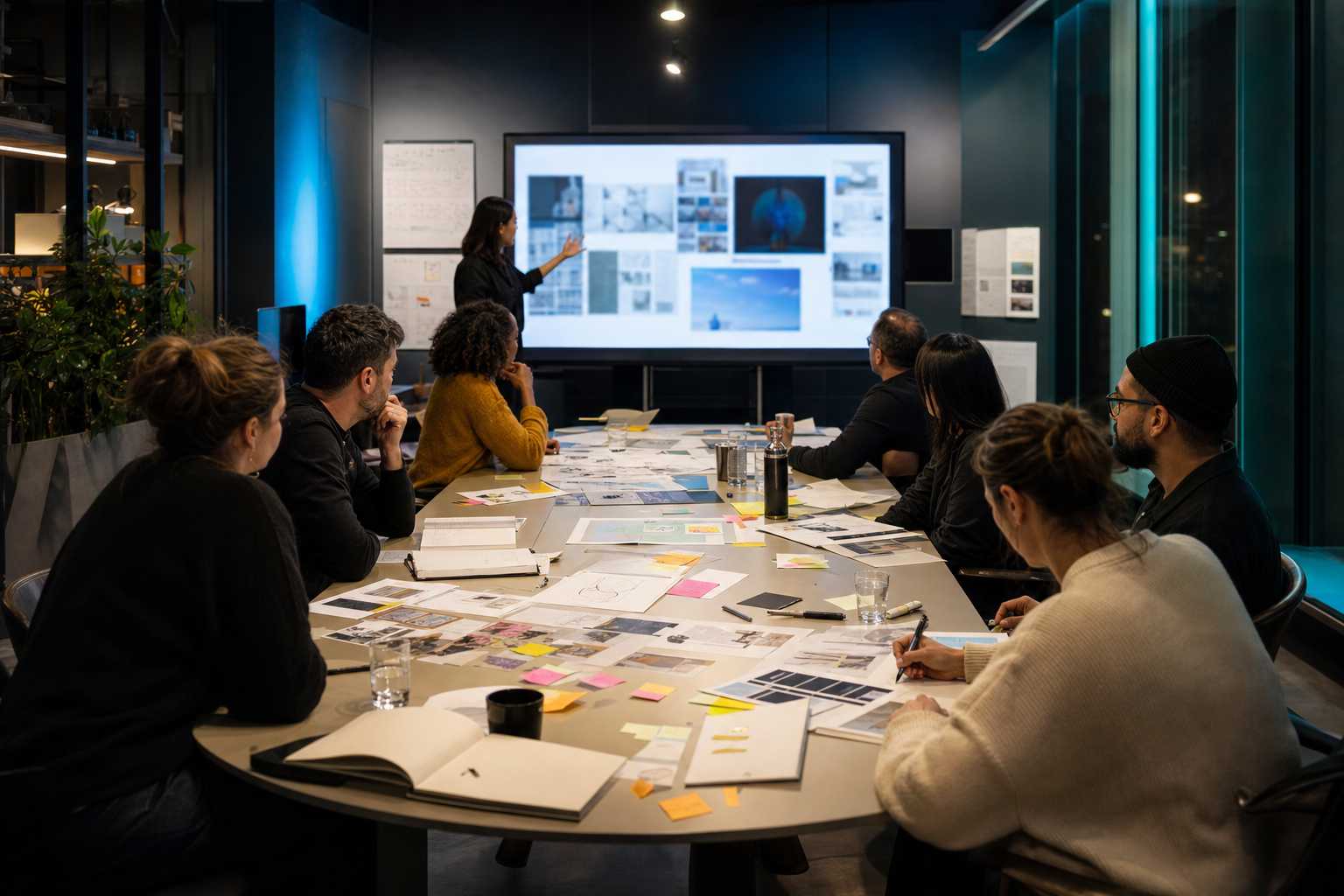
Whale gives insight, innovation, and brand teams a connected surface for this work. In live rooms, people can work from relevant research and references, contribute reactions and ideas, and keep the conversation close to the source material that prompted it. That enables image creation to add insight to the creative process without overpowering it.
Whalets extend that process to guided participant co-creation. Rather than only asking people to score a finished idea, a team can invite them to express, visualise, and refine a response. Prompts, changes, reactions, and explanations become richer material for synthesis—especially when viewed as a journey, not as isolated images.
Whale then helps teams synthesise patterns across a large body of data, bringing selected themes into ideaboards and storyboards. Each format supports a different decision: seeing recurring signals, comparing routes, or making a narrative tangible. The practical benefit is continuity: less time rebuilding context and more time improving the work.
Synthesis and prioritisation at scale
When a project contains hundreds of comments, concepts, images, prompts, or participant reactions, the challenge is not simply finding themes. It is deciding which patterns are meaningful enough to act on. AI can help cluster and surface material, but synthesis still needs a team to look at strength of evidence, recurrence, relevance to the brief, and the opportunity behind the pattern.
Whale supports this shift from volume to judgement. Teams can move across input and output—seeing participant contributions, the creative exploration they informed, and the themes that recur—then prioritise the routes that deserve further development. This keeps the work anchored when the amount of material could otherwise make the process feel noisy or arbitrary.
The best measure of success is not the number of images produced. It is whether a team reaches a clearer, more defensible creative decision with less unnecessary handover and repetition.
A practical Whale workflow for evidence-led image creation
Start with a focused question, not a request for generic images. Bring together the evidence, category context, and constraints that should inform the work. In a live room, make the signals discussable across disciplines so people can add context, challenge assumptions, and identify the tensions worth developing.
Next, use guided AI exploration to make potential routes visible. Treat early generations as stimuli to react to, not finished answers. Capture what feels true, surprising, off-brand, or missing; those reactions add a further layer of insight and help the team refine the direction.
Finally, synthesise the material and prioritise the strongest routes. An ideaboard can align a group around an opportunity; a storyboard can make a proposed experience easier to assess. Record what informed the choice and what still needs testing, so the next stage begins with context rather than a handover.
- Frame the decision and select the most relevant consumer evidence.
- Collaborate around signals, tensions, and early possibilities in a live room.
- Use AI to explore routes within clear creative and brand guardrails.
- Synthesize inputs at scale and prioritise the strongest evidence-led routes.
- Create ideaboards or storyboards for the next review, test, or production step.
Further reading
Need a direct answer?
Explore Whale’s collaboration and AI workshop FAQ.
Find clear answers to common questions about digital collaboration platforms, creative workshops, evidence-led innovation, and generative AI.
Visit the FAQ